Immunity
Inflammation
Supplements
The CBD Issue

September 11, 2026
September 11, 2026
For a while, CBD was everywhere.
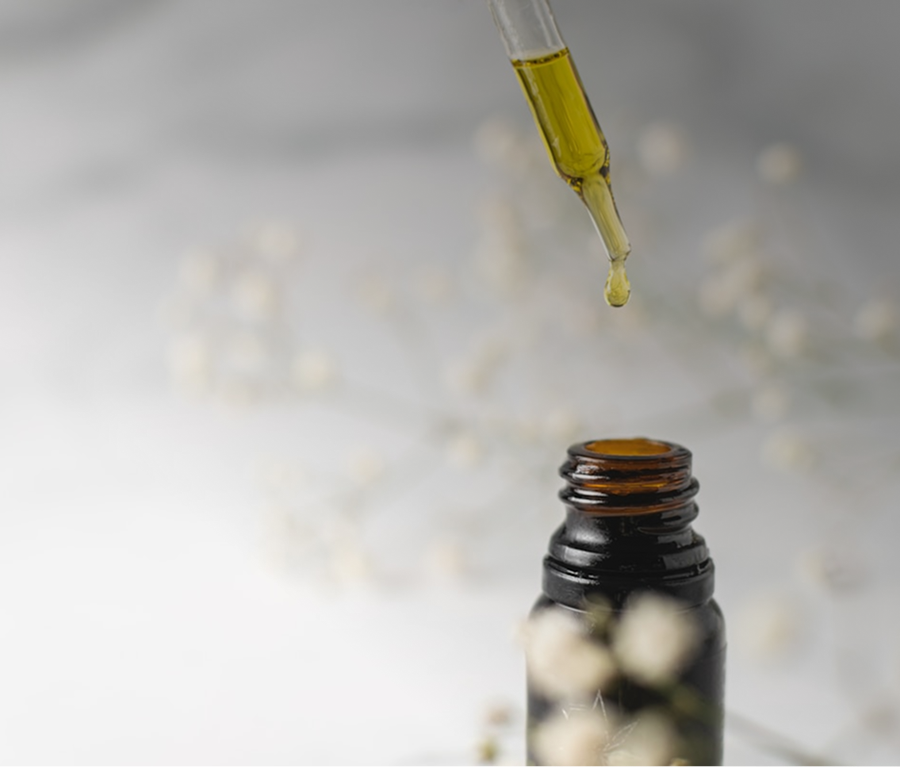
It was in coffee, sleep gummies, tinctures, recovery creams, sparkling water, dog treats. And depending on who was selling it, CBD seemed capable of doing almost anything: reducing anxiety, helping you sleep, relieving pain, lowering inflammation, speeding recovery, maybe even contributing to a longer, healthier life.
A lot of that got ahead of the science. But enough time has passed now that we can look back at the CBD boom with a little more clarity. And the answer is not that CBD was a scam. It’s also not that CBD was some misunderstood miracle that science is finally catching up to.
The truth, as is often the case, is somewhere in the middle.
CBD is a real, biologically active compound that clearly does things in the body. There is an FDA-approved CBD medication, and there is now a meaningful amount of controlled human research looking at what CBD can and cannot do. Now that the hype has died down, the more useful questions are where the science actually stands, what has been learned since the boom, and where the research is heading next.
We talked about CBD as though the ingredient itself was enough information. If a product contained CBD, the implication was that it might help with sleep, anxiety, pain, inflammation, or recovery.
But that leaves out some fairly important questions: How much CBD? Taken how? How much actually makes it into your bloodstream? Is it CBD alone, or CBD alongside THC and other cannabinoids?
Those details turn out to matter a lot.
And once you start looking at CBD through that lens, some of the confusion around it begins to clear up. The question is no longer simply, “Does CBD work?”
It’s, “For what, at what dose, and under what circumstances?”
CBD, short for cannabidiol, is one of over 120 cannabinoids found in the cannabis plant. The CBD you can legally buy in the US is generally derived from hemp, which the 2018 Farm Bill defines as cannabis containing no more than 0.3% delta-9 THC on a dry weight basis.
THC, of course, is the part of cannabis that gets you high. CBD doesn’t. It doesn’t strongly activate the CB1 receptors responsible for that intoxicating effect. What it does appear to do is interact with a much broader collection of systems involved in things like serotonin signaling, pain, neuronal activity, GABA, and the body’s own endocannabinoid system.
That wide reach helps explain how CBD ended up being studied for seemingly everything. But it also gets at one of the problems with talking about “the benefits of CBD” as though they’re one thing. Whether CBD actually works, and how well it works, depends very much on what you’re asking it to do.
An important story is emerging in the wellness industry: a deeper understanding of the Endocannabinoid System (ECS), one of the body's most influential cell-receptor networks.
Early CBD enthusiasm often overlooked the system cannabinoids interact with, but today, science is bringing the ECS into sharper focus. Emerging studies suggest the ECS plays an important role in resilience, sleep, pain management, recovery, and overall quality of life.
CBD CLINIC by Charlotte's Web advances trusted, science-led wellness solutions that help people live healthier lives. Through an unwavering commitment to quality, research, and initiatives like the CMMI Innovation Program, we're helping move cannabinoid wellness from promise to practice, advancing healthcare integration, measurable outcomes, and meaningful real-world impact.
Get 10% off applied automatically at checkout from now to November 16 when you use this link.
You can also join Marcel Bonn-Miller, PhD, Chief Scientific Officer, at Eudēmonia Summit on Saturday, November 7, at 2:30 p.m. to explore the ECS and the science shaping the future of cannabinoid wellness.
There is one FDA-approved CBD drug: Epidiolex, a purified form of cannabidiol used to treat seizures in several severe epilepsy syndromes. In one of the two pivotal trials in Lennox-Gastaut syndrome, drop seizure frequency fell by a median of 37% to 42%, depending on the dose, compared with 17% on placebo.
That is the clearest example we have that CBD can have a meaningful biological effect in humans.
Anxiety is probably the next most interesting area. In a controlled public speaking study in healthy men, 300 mg of CBD reduced anxiety during the speech, while 150 mg and 600 mg did not differ from placebo. An earlier study testing 100 mg, 300 mg, and 900 mg found a similar pattern: only 300 mg separated from placebo, and only after the speech was over. Who is being studied matters, too. In treatment-naive patients with social anxiety disorder, a single 600 mg dose did reduce anxiety during a simulated speech, so the dose that works in a clinical population may differ from the one that works in healthy volunteers.
That does not mean CBD is an anxiety treatment in the same way Epidiolex is an epilepsy drug. But it does suggest that CBD can have a real effect on anxiety under certain conditions. These were small studies (roughly 12 to 15 people per dose group) that tested a single dose, which is why larger and longer trials are the necessary next step.
It also points to something that comes up again and again with CBD: more is not necessarily better (but dose definitely matters).
CBD does not appear to work on a simple dose-response curve where twice as much produces twice the effect. At different doses, it can engage different biological pathways, which may help explain why a middle dose sometimes performs better than a higher one. This gets into some complicated biology.
So when someone says, “CBD did nothing for me,” or someone else says it worked extremely well, the dose may be part of the explanation.
Here’s what seems to help the last several years of CBD research make more sense: what you are trying to treat matters.
CBD has shown benefits in controlled human studies for things like acute situational anxiety, cue-induced drug craving, some aspects of psychosis, and, in a 2026 trial at 800 mg per day, neuropathic pain after spinal cord injury. But the results have been much less convincing for ordinary insomnia, fibromyalgia, and inflammatory pain. A knee osteoarthritis trial found 600 mg per day for eight weeks was no better than placebo (and raised liver enzymes in more people than placebo did), a 24-week trial in 200 people with fibromyalgia found 50 mg per day was no better than placebo (pain actually improved slightly more on placebo), and 150 mg taken nightly did not beat placebo on its primary sleep outcomes in a small two-week pilot in people with moderate to severe insomnia. Sleep is mixed rather than uniformly negative, though. A four-week crossover trial of 300 mg CBD combined with terpenes in people with severe insomnia found a marginal increase in deep and REM sleep on a wrist-worn tracker, with no change in total sleep time.
At first glance, that can make the CBD literature look all over the place. But these are very different biological problems. Pain caused by damaged nerves is not the same thing as pain from an inflamed joint. Anxiety triggered by an acute stressful event is not necessarily the same thing as chronic, generalized anxiety. There is no particular reason we should expect CBD to affect all of them equally.
Seen that way, the research starts to look less contradictory. It may simply be showing us where CBD has an effect and where it does not.
Inflammation is probably the most important example for anyone thinking about CBD through a longevity lens. Here, the evidence is still much less settled. CBD clearly interacts with inflammatory pathways in laboratory research, but translating that into a meaningful effect in people has been harder. Human biomarker studies have been mixed. An exploratory analysis from a trial in people with cocaine use disorder found lower interleukin-6 over 12 weeks at 800 mg per day, while an eight-week trial of 50 mg per day in healthy, active adults found no change in C-reactive protein.
So I would not put CBD in the anti-inflammatory longevity toolkit yet. There is enough here to keep studying it, but not enough to say that taking CBD is meaningfully lowering inflammation in otherwise healthy people.
There is a pretty striking gap between the doses used in CBD research and the doses most people actually take.
Many of the studies showing a benefit have used hundreds of milligrams of CBD, sometimes much more. In the anxiety studies we just looked at, the effective dose was 300 mg in healthy volunteers (600 mg in the social anxiety patients). Pharmaceutical dosing for epilepsy is 10–20 mg per kilogram per day for Lennox-Gastaut and Dravet syndromes (and 25 mg per kilogram per day for tuberous sclerosis complex), which at 20 mg per kilogram would be about 1,400 mg a day for a 154 lb adult. Meanwhile, a typical CBD gummy might contain 10, 20, or 25 mg.
If someone tells you that studies show CBD can reduce anxiety and then sells you a 15 mg gummy, those two things are not necessarily connected. The study they are referring to may have used twenty times as much CBD.
Interestingly, the higher doses used in research have generally been well-tolerated. A formal Phase 1 safety study in healthy adults tested single doses in the thousands of milligrams and repeated doses as high as 1,500 mg twice a day. The more common side effects were things like sleepiness, diarrhea, nausea, and headache. And unlike THC, increasing the dose does not simply make you progressively more intoxicated.
None of this means that 15 or 25 mg cannot have an effect. People respond differently, and as we have already seen, more CBD is not always better. It does mean we should be careful about borrowing the conclusions from a 300 mg study and applying them to a product containing a fraction of that amount.
What is in the bottle matters as much as the milligram count. Most of the trial doses above, including Epidiolex, are purified CBD, while many consumer products are full-spectrum hemp extracts that keep the plant's other cannabinoids and terpenes. The two do not appear to be interchangeable milligram for milligram. In an analysis pooling 11 observational studies of 670 patients with treatment-resistant epilepsy, those taking CBD-rich whole-plant extracts averaged about 6 mg per kilogram per day, roughly a quarter of the 25 mg per kilogram taken by those on purified CBD, with a similar share reaching a 50% seizure reduction (37% versus 42%) and fewer reported side effects. Those data are observational, not randomized, so they are a signal rather than proof, but they are a reason not to carry dose figures from isolated trials straight over to full-spectrum products.
And this gap between what researchers study and what consumers actually take turns out to be one of the most important parts of the CBD story.
Another number matters almost as much as the dose: how much CBD your body actually absorbs.
CBD is highly fat soluble and poorly water soluble, which means oral absorption can be both inefficient and surprisingly variable. Even something as simple as whether you take it with food can make a huge difference. In the Phase 1 study of the pharmaceutical formulation, taking 1,500 mg of CBD with a high-fat meal increased total exposure about 4x and peak blood levels about 5x compared with taking the exact same dose while fasted.
It’s the same number of milligrams but a very different amount of CBD actually reaches circulation. Taking it with food one day and on an empty stomach the next can substantially change the dose your body is effectively getting.
This is also where CBD formulations are becoming more interesting. In a randomized human crossover study, researchers gave people the same 25 mg dose of CBD in two different formulations. When CBD was delivered using a self-emulsifying formulation, peak blood concentrations were 4.4x higher than with standard MCT oil, and CBD reached those levels about two hours sooner. That is a pretty meaningful difference from two products that could both say “25 mg CBD” on the front of the bottle. Total exposure over 24 hours rose less, about 1.7x, and the study was funded by the formulation’s manufacturer, but the direction is clear.
And it helps explain why the number on the label cannot tell you everything about a CBD product. Formulation can determine how much of those 25 mg actually become available to your body.
One caution here: words like “nano” do not tell you much on their own. Nanoemulsions, liposomes, micelles, and self-emulsifying systems are different technologies, and putting one of those words on a label does not guarantee better absorption.
The better question is whether that particular formulation has actually been tested and shown to improve bioavailability.
One thing that got lost during the CBD boom is that CBD is only one cannabinoid. Two others are starting to get more attention: CBG and CBN. They come from the same plant, but they behave differently in the body, and the early human research on both is worth paying attention to.
CBG, or cannabigerol, is probably the more interesting of the two right now. It interacts with several signaling systems, including alpha 2 adrenergic receptors involved in regulating the sympathetic nervous system.
In the first placebo-controlled trial of CBG for anxiety, stress, and mood, a single 20 mg dose of hemp-derived CBG reduced self-rated anxiety, and at one time point, stress, compared with placebo in 34 healthy adults with prior cannabis experience, without causing intoxication or impairment. There was also an unexpected finding: participants performed better on a test of verbal memory.
It is one small study, but it is a legitimate human signal, and notably, it showed up at a dose someone might actually take. The stress effect appeared at only one of three time points, the anxiety effect held on a single-item rating but not on a standard anxiety scale, and the authors did not correct for multiple comparisons, so replication is needed. The basic safety work is also starting to appear: a 2026 dose-ranging study gave 12 healthy adults single doses of 25 to 200 mg of CBG isolate and found no drug-related adverse events and few subjective effects, which is the groundwork larger efficacy trials require.
CBN, or cannabinol, has become the cannabinoid most associated with sleep. It interacts with cannabinoid receptors somewhat differently than CBD. There is now some human evidence behind the sleep claims. In a randomized, placebo-controlled trial in which 293 adults with self-rated poor sleep took the products for seven nights, 20 mg of CBN reduced nighttime awakenings and overall sleep disturbance compared with placebo, without increasing next-day fatigue (one interesting detail is that adding CBD did not make it work any better, and may have worked against it). The trial’s primary outcome, a nightly sleep quality rating, favored CBN but did not reach statistical significance (the study stopped short of its planned enrollment), so the awakenings and sleep disturbance results are secondary findings that need to be repeated in a larger trial.
Researchers are now beginning to look more closely at what CBN may actually be doing to sleep itself, including studies measuring sleep architecture, rather than relying only on whether people report sleeping better. In a 2026 crossover study of 20 adults with diagnosed insomnia disorder, a single 300 mg dose of CBN shortened the time to fall asleep by about seven minutes and increased stage 2 sleep on overnight polysomnography, although it did not reduce time awake after sleep onset (the primary outcome), and a 30 mg dose, closer to what is sold, had little measurable effect on the sleep recording. The parallel with the CBD anxiety studies is worth drawing. The 20 mg trial enrolled people from the general population with poor sleep; the polysomnography study enrolled patients with diagnosed insomnia disorder, and a clinical population may simply need more, which would fit 30 mg doing little while 300 mg did something. That is a hypothesis rather than a finding, and a dose-ranging trial in people with insomnia is the way to test it.
None of this means CBG or CBN are proven. Human research is still early, and we know considerably less about their long-term use than we do about CBD. But it does mean that lumping everything together as “CBD” is becoming less useful. If you are looking at a cannabinoid product now, the better question is which cannabinoid is in it, how much is there, and what are you actually taking it for?
Both the CBG trial and the first CBN trial used a 20 mg dose. That is very different from much of the CBD research, where the doses showing an effect can be hundreds of milligrams. With CBG and CBN, at least some of the early research is happening at doses that look much more like what people actually find on the shelf.
Topical CBD is one of the most popular ways people use CBD, and probably one of the easiest to misunderstand.
The basic idea makes sense. The skin has cannabinoid receptors and other signaling pathways involved in pain, so applying CBD directly to a sore knee, shoulder, or muscle is at least biologically plausible.
But a standard CBD cream or balm is doing something very different from a tincture or gummy.
Very little CBD from a typical topical product makes it into the bloodstream. That can be an advantage if what you want is a local effect without much systemic exposure. It also puts a pretty clear limit on what you should expect from it. A cream rubbed on your knee is not going to meaningfully improve your sleep or reduce anxiety.
The research here is still fairly thin. Small studies have suggested possible benefits for certain types of localized pain, but the results are inconsistent. In one small placebo-controlled trial (21 college-aged adults, with a CBD topical applied to one arm and placebo to the other arm of each participant), topical CBD did not improve muscle soreness or recovery after exercise compared with placebo.
Formulation matters here, too. Cannabinoids do not pass easily through the skin, so what the CBD is suspended in and how the product is designed can make a substantial difference in how much actually reaches the tissue underneath.
But try it for yourself. If you have a sore knee, tight shoulder, or some other very specific area bothering you, a good topical is a reasonable thing to try. Use it consistently in the same area for a period of time and see if it helps.
Most of the research we have is on oral products and tinctures. Holding a tincture under your tongue is often said to speed onset by letting some CBD enter the bloodstream before it passes through the liver, but the human pharmacokinetic data do not show much of a difference: in the studies that compared sublingual or oromucosal CBD with swallowed CBD, peak levels and the time to reach them were similar.
Smoking and vaping deliver cannabinoids quickly, but introducing smoke or vapor into the lungs is difficult to justify as part of a health or longevity routine. For most people interested in CBD for wellness rather than recreation, oral products make considerably more sense.
And while CBD does not get you high, that does not mean it is biologically insignificant. The FDA notes that CBD can cause liver injury and can change how other medications you take work, and the clearest human data on both come from higher, sustained doses. That concern is no longer theoretical at consumer-relevant doses. In a 2025 trial run by FDA scientists, 5.6% of healthy adults taking about 400 mg per day of the pharmaceutical formulation for four weeks developed liver enzyme elevations more than three times the upper limit of normal, compared with none on placebo. That dose is 16–40 times the 10–25 mg in a typical gummy, and far above what most people take. The elevations were silent in all but one participant, appeared after 3 weeks, and resolved within 1–2 weeks of stopping. Studies below 50 mg per day have not reported elevations of that size, although those studies were small.
That matters most if you are taking medications such as blood thinners, sedatives, antidepressants, or antiseizure drugs, particularly drugs where small changes in blood levels can matter. Pregnancy and breastfeeding are another reason to talk with a physician before using it.
As with almost everything else we have covered here, dose matters. The concerns seen with hundreds or thousands of milligrams of CBD taken regularly should not automatically be applied to someone taking 20 mg at night. But the reverse is also true. CBD is active enough to do something, which means it is active enough to interact with other things you are taking
The quality gap between the best and worst of this industry is wide, which makes brand selection the highest-leverage decision you'll make. Early lab audits, including a 2017 JAMA study, found widespread label inaccuracy. A 2024 analysis of 202 products bought online found 74% were off their CBD label claim by more than 10%, three products labeled broad-spectrum (THC removed) contained THC, two of them above 0.3%, and between about 1% and 9% of products, depending on the contaminant and which regulatory limit is applied, exceeded a limit for lead, residual solvents, or pesticides. Hemp pulls up whatever is in its soil, so sourcing and testing aren't just fine print. They're the product.
The good news: the reputable end of the industry has largely addressed this, and it's easy to verify.
The next few years should answer several of the questions the first decade left open, because the trials now under way are larger, longer, and better measured than most of what came before. A Phase 3 trial of 75 mg and 150 mg CBD capsules taken nightly for insomnia, planned at 519 people over 8 weeks, has finished enrolling and is awaiting results. A University of Colorado trial is randomizing 385 adults aged 60 and older who want to use cannabinoids for pain, anxiety, or mood problems to full-spectrum hemp CBD (200 mg CBD with 4 mg THC), broad-spectrum CBD (200 mg, no THC), or placebo, with pain, sleep, anxiety, cognition, balance, and blood inflammatory markers all measured, which is close to a direct test of whether the small amount of THC in full-spectrum products matters. University of Michigan investigators are running placebo-controlled trials of the pharmaceutical CBD formulation in knee osteoarthritis (a mechanistic study of CBD, THC, and the combination) and in veterans with chronic pain. None of these will settle everything, but they are the kind of studies that can.
The field is also moving from asking people how they slept to measuring it, and from lumping cannabinoids together to testing them one at a time. The CBN polysomnography study and the CBG dose-ranging study above are early examples.
Medicare has entered the picture as well. On April 1, 2026, the Centers for Medicare & Medicaid Services opened an optional Substance Access Beneficiary Engagement Incentive in two of its Innovation Center payment models, ACO REACH and the Enhancing Oncology Model. Physicians in participating organizations may consult with eligible beneficiaries about hemp-derived products for symptom control and furnish them, up to $500 per beneficiary per year. Medicare does not pay for the products, and CMS states that it makes no claims about their therapeutic value.
The guardrails are strict: products must be third-party tested for potency and contaminants, inhalable and topical products are excluded, oral products may contain no more than 3 mg of tetrahydrocannabinols per serving, the physician must document shared decision-making including a medication review, and participating organizations must file an implementation plan and quarterly reports. Whatever one thinks of the policy, it means cannabinoid use by older adults will be documented inside a structured federal program that CMS says it will monitor and evaluate. A December 2025 executive order separately directed HHS, FDA, CMS, and NIH to develop real-world-evidence research methods for hemp-derived cannabinoid products. At this scale, real world evidence can show how these products are actually used and by whom.
The rules for what counts as hemp are changing, too. A law enacted in November 2025 rewrites the federal definition around total THC (including THCA) rather than delta-9 THC alone, and limits a finished hemp product to 0.4 mg of total THC (and THC-like cannabinoids) per container. The White House’s own executive order notes that some full-spectrum CBD products will “once again be controlled as marijuana” when that provision takes effect, and directs staff to work with Congress on updating the definition. After a short delay enacted on September 2, 2026, the exclusion of products containing cannabinoids the plant cannot naturally produce takes effect November 12, 2026, and the rest of the new definition on December 11, 2026, unless Congress acts again. FDA, for its part, said in January 2023 that the existing food and supplement frameworks do not fit CBD and asked Congress for a new pathway; none has been enacted.
The honest summary is that the science is maturing rather than collapsing. The first decade produced small, short, single-dose studies that were easy to over-read in both directions. The current one is producing larger, longer, better-measured trials, plus a federal program that will generate real-world data on older adults, and those are what will tell us which of the early signals were real.
Yes.
CBD is a real pharmacologically active compound with a legitimate medical use, and there is good human evidence that it can affect anxiety under certain conditions. CBG and CBN are now producing some interesting early results of their own, and better formulations may solve part of the absorption problem that made many early consumer products difficult to evaluate.
But that is very different from saying CBD belongs in everyone’s daily wellness routine.
For sleep, pain, arthritis, exercise recovery, inflammation, mood, neuroprotection, and longevity, the evidence is still much less convincing. There are positive signals in some areas, but not enough to make a broad claim that CBD is good for health. For sleep specifically, the more encouraging early data now belong to CBN rather than CBD.
And the longevity case is not there . . . yet.
The more useful way to think about CBD now is as something targeted rather than general.
What are you trying to accomplish? Which cannabinoid are you taking? At what dose? How much of it are you actually absorbing? And is there decent human evidence that it works for that particular goal?
Ten years ago, CBD was sold almost as a category of wellness unto itself. We know enough now to be much more specific.
That makes CBD less exciting than the original hype suggested. It also makes it considerably more useful.
Disclaimer: This newsletter is provided for educational and informational purposes only and does not constitute providing medical advice or professional services. The information provided should not be used for diagnosing or treating a health problem or disease, and those seeking personal medical advice should consult with a licensed physician.
October 16, 2026
September 30, 2026
September 29, 2026

September 24, 2026
September 24, 2026
September 18, 2026
September 11, 2026

September 4, 2026

August 29, 2026