Longevity
Preventative Health
Recovery
The Pelvic Health Issue

September 11, 2026
September 11, 2026
One in three women will deal with some form of pelvic floor dysfunction in her lifetime, according to UCLA Health.
Among women who have given birth, that number climbs closer to 45%. And research out of Tufts found that women wait a median of seven years after symptoms begin before bringing them up with a doctor.
Pelvic floor dysfunction is incredibly common, but it is still one of those health issues people tend not to talk about until it becomes difficult to ignore.
That delay is part of what makes this worth talking about. Pelvic floor problems are common, they can show up in very different ways, and many of them are treatable. But if nobody talks about leaking, pressure, pain, sexual discomfort, or changes after childbirth and menopause, it’s easy to assume those things are simply part of being a woman.
While there have been advances in diagnosis, imaging, urogynecology, multidisciplinary treatment, and surgery, newer evidence has also made the field less dogmatic. Even the seemingly obvious advice that “everyone should do Kegels after having a baby” is getting more nuanced.
So this issue is going to do two things: explain what’s actually happening to the pelvic floor at different stages of life, and give you a practical protocol for taking care of it, whether you are trying to prevent problems or already dealing with one.
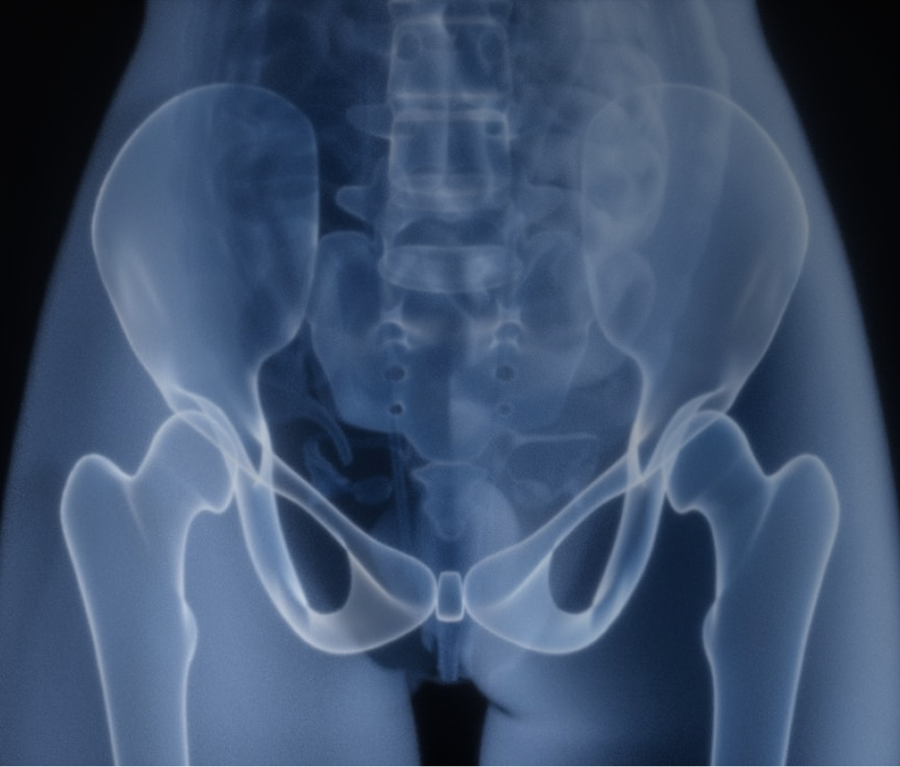
A woman’s pelvic floor is a hammock of muscles and connective tissue stretching from the pubic bone to the tailbone. It holds the bladder, uterus, and rectum in place, coordinates your bladder and bowel control, contributes to core stability—alongside your deep abdominals and back muscles—and plays a direct role in arousal and orgasm, according to a clinical overview of pelvic floor function.
It is, in other words, load-bearing infrastructure. When it's working well, you never think about it. When it's not, everything from your posture to your sex life to your ability to sneeze without consequence can be affected.
We used to treat the pelvic floor relatively simplistically. We now understand that it is a complicated muscular, connective tissue and neuromuscular system that can be weak, tight, injured, poorly coordinated, or some combination of all four. And treatment increasingly depends on figuring out which problem a woman actually has.
During a vaginal delivery, the levator ani muscle has to stretch to more than 3x its resting length to allow a baby to pass through. That can cause significant injury, including levator ani avulsion, which occurs in an estimated 6-42 percent of vaginal births and is associated with prolapse later in life.
Cesarean delivery lowers the risk, but does not eliminate it, since pregnancy itself also changes the pelvic floor, according to NewYork Presbyterian.
The pelvic floor also changes with age. Muscle strength declines. Connective tissue becomes less resilient. And the effects of previous pregnancies, weight changes, constipation, chronic coughing, and years of increased abdominal pressure can accumulate.
That helps explain why pregnancy, obesity, and menopause are consistently among the major risk factors for pelvic floor dysfunction.
As estrogen declines, the vaginal and urethral tissue becomes thinner, drier, and less elastic. These changes are part of genitourinary syndrome of menopause, or GSM, which affects somewhere between 50–70 percent of postmenopausal women.
Menopause can also make an existing pelvic floor vulnerability more noticeable, which is why symptoms that seemed minor earlier in life can become much harder to ignore
The most common complaint, ranging from a small leak with a cough or sneeze—called stress incontinence—to a sudden, hard to control urge—called urge incontinence. They have different causes and can require different treatments, which is part of why an evaluation matters more than simply doing Kegels and hoping for the best.
This happens when weakened muscles and connective tissue allow the bladder, uterus, or rectum to drop lower than they should, sometimes causing heaviness, pressure, or a visible bulge. It affects roughly a quarter of US women.
The pelvic floor is directly involved in sexual response and orgasm. Muscles that are too tight can make sex painful, while weakness or poor coordination can contribute to less intense orgasms or difficulty reaching one. Around menopause, declining estrogen can add another layer by making vaginal tissue thinner, drier, and more sensitive. These problems can overlap, but they are not necessarily caused by the same thing.
The pelvic floor works with the diaphragm and deep abdominal muscles to manage pressure and stabilize the torso. When those muscles are not coordinating properly, low back pain can sometimes be part of the picture. It is a recognized symptom of pelvic floor dysfunction, even though it is often treated as a purely orthopedic problem.
The pelvic floor does not work alone. It is part of an interconnected system involving the abdominal muscles, posture, stability, and movement. Core to Floor combines EMSELLA and EMSCULPT NEO to address this system more comprehensively, strengthening the pelvic floor while conditioning the abdomen.
Both treatments are non-invasive and require no downtime. EMSELLA stimulates pelvic floor muscle contractions while patients remain fully clothed. EMSCULPT NEO uses high-intensity focused electromagnetic energy and synchronized radiofrequency to build abdominal muscle and reduce fat.
Published studies have evaluated the combined protocol in postpartum women and older adults. In postpartum women, core strength increased 27.9% at three months; 94% reported a stronger pelvic floor, and 97% reported a stronger core. Among adults ages 60 to 79, core strength increased 33.7%, with reported improvements in movement and daily activity. Core to Floor reframes pelvic wellness as whole-body function, supporting stability, movement, confidence, and quality of life.
For decades, Kegels were basically the default answer to pelvic floor problems. The evidence is more specific than that.
For stress incontinence, the leaking that happens with coughing, sneezing, or laughing, pelvic floor muscle training has a Grade A recommendation from the International Consultation on Incontinence for short term improvement, according to a clinical review. So for the right problem, Kegels absolutely work.
The evidence is less convincing for urge incontinence and prolapse. Some studies suggest pelvic floor training can improve prolapse symptoms, while others have found that stronger muscles do not necessarily reverse prolapse that is already present.
And not every dysfunctional pelvic floor is weak. Some are too tight or poorly coordinated. In those cases, repeatedly squeezing can actually make pain or other symptoms worse.
Roughly 30 percent of women have difficulty correctly contracting their pelvic floor muscles in the first place.
That matters because supervised training tends to outperform simply being told to do Kegels at home. A 2025 meta analysis found stronger evidence for supervised pelvic floor training than self directed programs.
So learning how to correctly do kegels is vital.
There is evidence that pelvic floor training can improve sexual function, particularly arousal, orgasm, and satisfaction. A 2024 systematic review and meta analysis of 21 randomized trials found improvements across those measures, although the certainty of the evidence was low.
That makes biological sense, since the pelvic floor muscles are directly involved in sexual response and orgasm. A separate 2024 review found a moderate association between pelvic floor strength and sexual function, and every study that specifically measured sexual response found pelvic floor involvement in arousal or orgasm.
Libido is less straightforward. Desire is influenced by far more than pelvic floor strength alone, so I would not treat Kegels as a reliable way to increase sex drive.
All of this has produced something of a Kegel backlash, with some people now arguing they are basically useless.
That’s probably just the pendulum swinging too far in the other direction. Kegels are not useless. They were just treated as a universal solution when they were never one.
Kegels are an exercise, not a diagnosis. If your pelvic floor is weak, they may be exactly what you need. If it is tight, painful, or poorly coordinated, they may not be. And if you have been doing them for months without improvement, the answer probably is not more reps. It’s figuring out what is actually wrong.
First, figure out what you're dealing with.
Ask the important question: Is that muscle weak, or is it already gripped and overworked? A pelvic floor can be constantly tight and overactive, a state called hypertonicity, and still fail to do its job well. Tight does not mean strong, any more than a permanently clenched shoulder means a strong one, per Hinge Health.
It's often driven by stress held in the body, habitual shallow chest breathing, or years of over-squeezing, sometimes from doing Kegels nobody told you to stop doing. These two patterns need close to opposite treatment, which is exactly why generic advice fails so often. If you genuinely can't tell which one describes you, that uncertainty is itself reason enough to get evaluated rather than guess.
Regardless of your particular problem, there’s good pelvic floor maintenance and strengthening. There's a real, practical difference between protecting a pelvic floor that's still working well and trying to rebuild one after function is already lost, and the former is a meaningfully easier project. If you're not pregnant, haven't had children, and have no symptoms at all, that's still a reasonable time to start.
Prevention is less about chasing a perfect posture or doing endless Kegels than reducing repeated strain and learning how to coordinate the pelvic floor when it matters. These small, evidence-informed habits can help protect bladder and pelvic-floor function across everyday life, pregnancy, and menopause.
This is genuinely the centerpiece, probably the single highest-leverage item on this list. Supervised pelvic floor muscle training is recommended as an initial, first-line treatment for several of the most common pelvic floor disorders, including stress incontinence and some degrees of prolapse, rather than something reached for only after other options fail, per a clinical treatment review.
It's also, per the supervised-versus-self-directed research, simply more effective than trying to run the same exercises off an article (or, ahem, a newsletter). If someone does only one thing from this list, this is the one.
This is where Kegels fit in, taught correctly and prescribed for the actual problem, mainly stress incontinence, rather than handed out as generic advice for anything pelvic. Grade A evidence for short-term improvement, real limits for urge incontinence and prolapse, and meaningfully better results with real feedback than guesswork.
For an overactive or hypertonic pelvic floor, treatment runs the other direction entirely: diaphragmatic breathing, deliberate "down training" to lengthen and release the muscle rather than contract it, and manual, hands-on work from a pelvic floor therapist, a set of approaches laid out in a hypertonic pelvic floor guide. This is often the missing piece for people who tried Kegels and didn’t find relief or got worse.
This deserves more attention than it usually gets. Chronic straining loads the pelvic floor over and over, and the overlap is larger than most people assume, up to half of people with long-term constipation also have some form of pelvic floor dysfunction, according to a clinical overview.
Fixing fiber, hydration, and toileting habits is unglamorous, but it's a real lever, not a footnote.
A pessary is a removable silicone device fitted internally to mechanically support prolapse without surgery, and it's a well-established, first-line option, per NYU Langone..
For genitourinary syndrome of menopause, the 2025 clinical guideline from the AUA, SUFU, and AUGS found that low-dose local vaginal estrogen has the strongest evidence base of any available treatment, ahead of moisturizers, dilators, or energy-based procedures.
Worth mentioning, not worth dwelling on. It matters for more significant prolapse or incontinence that hasn't responded adequately to the conservative options above, and it's often genuinely effective when it does become necessary, but per ACOG, it's rarely the first move
If you are pregnant or newly postpartum, timing is the one variable that changes.
Gentle pelvic floor and breathing work can often start within days of a straightforward vaginal birth, once you feel ready, per guidance summarized from ACOG. If you're recovering from a C-section, get your provider's go-ahead first. Abdominal separation, or diastasis recti, tends to improve substantially by 8 weeks postpartum, with more significant closure by six months for many women.
If you’re pregnant, start before delivery, not only after. Perineal massage beginning around 34–35 weeks can modestly reduce perineal trauma requiring stitches during vaginal birth, especially for people having their first vaginal birth. A Cochrane review estimated that for every 15 people who used antenatal perineal massage, one fewer needed perineal sutures. Pelvic floor muscle training during pregnancy and after birth is also recommended as a preventive measure.
Hold off on crunches, planks, and high-impact training like running until closer to 12 weeks, and watch for doming along your midline as a sign to scale back. One more thing worth knowing: in much of Europe, pelvic floor physical therapy is a standard, insurance-covered part of postpartum care. In the US, it usually isn't offered unless you ask, according to a urology researcher at Keck Medicine. So ask.
Another number matters almost as much as the dose: how much CBD your body actually absorbs.
There have been meaningful advances, but I would not frame pelvic floor health as a field that has suddenly been transformed by a new breakthrough.
The anatomy is the same, the major risk factors are largely the same, and some of the core treatments—especially pelvic floor muscle training and pessaries—have been around for a long time.
The bigger change is that we are getting better at identifying problems earlier, treating them more specifically, and challenging the idea that leaking, prolapse, pain, or sexual dysfunction are just inevitable parts of childbirth or aging.
We also understand the pelvic floor less simplistically than we used to. Stronger is not always better. Kegels are not always the answer. And two women with the same symptom may need completely different treatment depending on whether the underlying problem is weakness, tightness, coordination, hormones, or structural damage.
That is probably the most useful takeaway. Pay attention earlier. Do not wait until something becomes disruptive. And if something does feel off, get evaluated before assuming you know what the fix is.
The pelvic floor is trainable, treatable, and much more important to everyday health than most of us were ever taught.
Disclaimer: This newsletter is provided for educational and informational purposes only and does not constitute providing medical advice or professional services. The information provided should not be used for diagnosing or treating a health problem or disease, and those seeking personal medical advice should consult with a licensed physician.
September 11, 2026

September 4, 2026

August 29, 2026

August 21, 2026

August 15, 2026
August 7, 2026
July 30, 2026

July 23, 2026