Peptides
Skin health
Supplements
The Collagen Issue

August 28, 2026

August 28, 2026
These days, collagen is more than a buzz word. It’s become shorthand for how we think about keeping skin youthful, resilient, and healthy. It’s part of every skincare story.
Powders. Serums. Microneedling. Lasers. Red light. Exosomes. Copper peptides. Topicals. Polynucleotides. Injectables.
It’s in your protein shake and your coffee creamer. There is now an entire industry and marketplace built around the promise that we can preserve, restore, or somehow manufacture younger skin . . . and it starts with collagen.
That’s for good reason. Collagen is the dominant structural protein in the dermis, the thick layer of tissue sitting underneath the epidermis. When that collagen network is healthy, skin looks thicker, smoother, and more resilient. When it deteriorates, we see many of the things we associate with aging: wrinkles, thinning, and changes in texture.
And while you cannot fully restore skin to its younger collagen architecture, you can substantially slow collagen breakdown, support new collagen production, and improve visible texture, fine lines, and firmness over time.
This particular deep dive runs the risk of ballooning a bit, because every intervention we list is worthy of its own deep dive. So instead, we’re going to give you the map to which methods can meaningfully protect and stimulate new collagen, and which of the newer technologies are genuinely exciting. And along the way, we’ll try to answer as many questions as possible.
Think of this as a guide to the collagen landscape as it exists right now, from the basics that still matter most to the biotech that may define what comes next.
Collagen is a family of proteins found throughout the body. There are at least 28 known types, but the dermis (the deeper, supportive layer of skin) is made primarily of type I collagen, with type III collagen also playing an important role. Together, they form much of the skin’s structural framework.
Think of them as the structural cables of the dermis. They are woven into something called the extracellular matrix, or ECM, alongside elastin, hyaluronic acid, proteoglycans, and other molecules. The ECM is a living environment that communicates with the cells embedded inside it.
At the center of this process are cells called fibroblasts. Fibroblasts make, organize, and maintain much of the dermal ECM, including collagen, elastin-related components, proteoglycans, and structural glycoproteins. They also participate in wound repair. With aging (and particularly with UV exposure), the collagen network becomes less abundant and more fragmented, while fibroblasts become less effective at maintaining it; the result is thinner, less resilient skin.
Those fibroblasts are the target of every intervention discussed below. Nothing you drink, swallow, smooth on, or inject turns directly into collagen in your face. It may supply raw materials, send a biological signal, slow collagen breakdown, or prompt a repair response that encourages the skin to make and reorganize its own matrix.
Researchers have described this as a self-perpetuating cycle of skin aging. Damaged collagen changes fibroblast behavior. Dysfunctional fibroblasts then produce less new collagen and more matrix metalloproteinases, or MMPs, that degrade the collagen around them. Which creates even more damaged collagen.
This emerging view of fibroblast aging is changing how researchers think about skin rejuvenation.
Collagen is what gives skin its firmness, structure, and resilience. But as we age, collagen production declines—and changes at the cellular level can accelerate visible aging. That’s where OneSkin takes a different approach.
Founded by four PhD longevity scientists, OneSkin spent more than a decade researching the biological mechanisms behind skin aging. Their work led to the OS-01 Peptide™, a patented molecule scientifically proven to address senescent cells, or damaged “zombie cells” that accumulate with age and contribute to visible skin decline.
Powered by this technology, OS-01 FACE goes beyond hydration to address a leading driver of visible skin aging. In a double-blind, 12-week clinical study, 100% of users showed improvement in overall appearance, 96% improved visible firmness, 87% improved the appearance of wrinkles, and skin-barrier strength improved by 15%. It’s daily skincare backed by longevity science and designed to help skin look and feel healthier at every age.
Explore the science behind OneSkin and take 20% off with code EUDEMONIA.
Two things: chronological aging and photoaging. They are different problems.
With chronicle age comes declining production. Dermal collagen falls by roughly 1–1.5% per year beginning in early adulthood. For women, the curve steepens sharply at menopause, with some studies suggesting a loss of up to 30 percent of skin collagen in the first five years after the transition, driven by estrogen withdrawal at the fibroblast receptor. This is the “collagen cliff” you might see referenced on social media.
Photoaging comes with sun exposure. Ultraviolet radiation generates reactive oxygen species and activates signaling pathways that increase MMPs that chew through existing collagen while suppressing some of the pathways responsible for making new collagen.
In other words, UV exposure simultaneously steps on the accelerator of collagen destruction and the brake on collagen production, which helps explain why sun-exposed skin on the forearms can look so different from less exposed skin on the very same person.
Usually we’d wait until the second half of the newsletter to dig into all the best ways to protect your skin health, but this is too important to wait. Sunscreen might be the single most important (and cost-effective) intervention in this entire issue.
In a randomized trial of more than 900 adults, participants assigned to daily broad-spectrum sunscreen showed 24% less skin aging over 4.5 years than those left to use sunscreen at their own discretion. The daily group showed no detectable increase in skin aging at all across the study period. That is a randomized, multi-year, measured photoaging endpoint, and it remains one of the strongest pieces of evidence in dermatology.
Which sunscreen to use is a different discussion. But sunscreen is only one part of a good sun protection strategy. Limiting direct exposure during the hours when UV radiation is strongest, seeking shade, and using hats, clothing, and other physical barriers can all meaningfully reduce the amount of UV that reaches your skin in the first place.
This is the biggest category, and probably the most debated.
You do not swallow collagen and somehow send it intact to the skin on your face. It gets digested. But that doesn’t mean it’s biologically irrelevant.
Some of the resulting peptides, including Pro Hyp, show up in the bloodstream and appear to function as signaling molecules. In laboratory studies, they can stimulate fibroblasts to produce more type I and type III collagen while reducing some of the activity involved in collagen breakdown. So there is a plausible mechanism here.
The human data are encouraging, although probably not as impressive as the marketing would have you believe. A meta analysis of 26 trials involving 1,721 people found significant improvements in skin hydration and elasticity compared with placebo.
In 2026, researchers went back through the literature using more rigorous statistical methods designed to account for unusually influential studies and the significant variation between trials.
Their analysis found that improvements in hydration, elasticity, and skin barrier function held up. Wrinkle depth, skin roughness, and dermal density did not.
If you are taking collagen because you want your skin to be better hydrated, more elastic, and perhaps function better as a barrier, there is a reasonable case to be made.
If you are taking it because you believe you are rebuilding the underlying architecture of your dermis, the evidence is much less convincing.
In other words, oral collagen increasingly looks like a legitimate intervention for skin quality, but not necessarily a powerful structural remodeling tool.
Then we get to the funding issue. A 2025 meta analysis looked at 23 randomized trials and separated them according to who funded the research.
When all the studies were pooled together, collagen appeared to improve hydration, elasticity, and wrinkles.
But when researchers looked only at trials not funded by pharmaceutical or supplement companies, those benefits disappeared. The independently funded studies found no significant improvement in any of the three outcomes. The positive results were concentrated in the industry-funded studies. The same pattern showed up with study quality: the higher quality trials found no significant benefit.
That does not mean the industry-funded studies are wrong, or that companies should not fund research on their own products. But it does make the overall evidence less convincing than it first appears.
Oral collagen may still do something, particularly for hydration and elasticity, but we should be careful about how confidently we say that when so much of the positive evidence comes from studies funded by companies that stand to benefit from a positive result.
Let’s start with the thing that does not work: putting collagen on your skin does not put collagen into your dermis.
But that doesn’t mean topical treatments cannot affect collagen. The interventions that work do something very different: they penetrate the skin and signal your own cells to make more collagen, preserve the collagen you already have, or both.
Retinoids
Retinoids remain the gold standard.
A landmark 1993 trial showed that topical tretinoin could restore type I collagen formation in sun-damaged human skin. More recently, a 2024 meta analysis of eight randomized trials involving 1,361 people confirmed significant improvements in visible photoaging.
Tretinoin works on both sides of the collagen equation. It stimulates type I procollagen production while also suppressing some of the MMP activity responsible for breaking collagen down.
Over the counter retinol works through many of the same pathways, but it first has to be converted into retinoic acid inside the skin, which makes it considerably less potent.
When it comes to stimulating collagen topically, tretinoin is still the intervention everything else should probably be compared against.
Vitamin C
Vitamin C is another one that deserves to be here for reasons beyond marketing.
Your body actually needs vitamin C to make collagen. It acts as a cofactor for enzymes involved in assembling and stabilizing the collagen molecule. Topical L ascorbic acid also has antioxidant effects and is one of the better supported topical ingredients for photoaged skin.
A small double-blind study found that 12 weeks of topical vitamin C not only improved wrinkles, but skin biopsies showed new collagen formation.
The catch, as always, is formulation. Vitamin C is notoriously unstable, and getting enough of it through the skin is not trivial. Concentration, pH, packaging, and the rest of the formulation matter enormously. A recent review makes the same point: the biological case for vitamin C is strong, but penetration and stability remain major limitations.
GHK is a naturally occurring peptide made up of three amino acids: glycine, histidine, and lysine. When it binds to copper, you get GHK-Cu, one of the more interesting signaling peptides in skin biology.
In laboratory studies, GHK-Cu has increased collagen and elastin production in fibroblasts and influenced enzymes involved in remodeling the extracellular matrix. Small human studies have also reported improvements in skin density, thickness, fine lines, and wrinkles.
So why is it not in the same category as tretinoin?
Because the biology is ahead of the clinical evidence. Most of the human research is small, older, or connected to the cosmetics industry, and not every study has been positive.
There is also a delivery problem. Peptides are relatively large molecules, and intact skin is very good at keeping them out, which is one reason copper peptides are sometimes paired with microneedling.
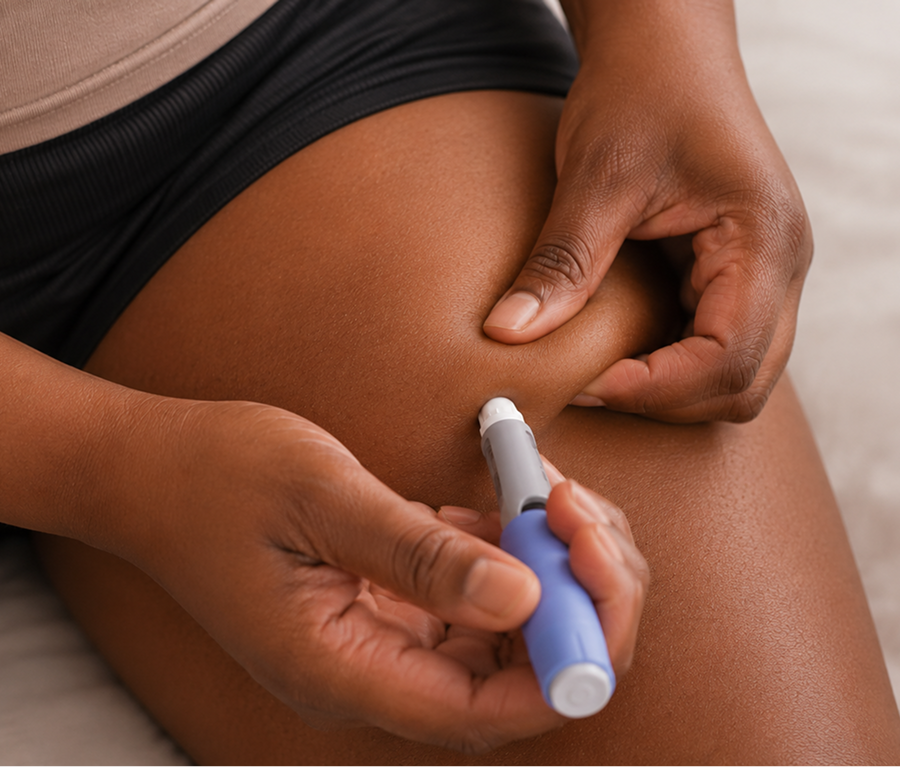
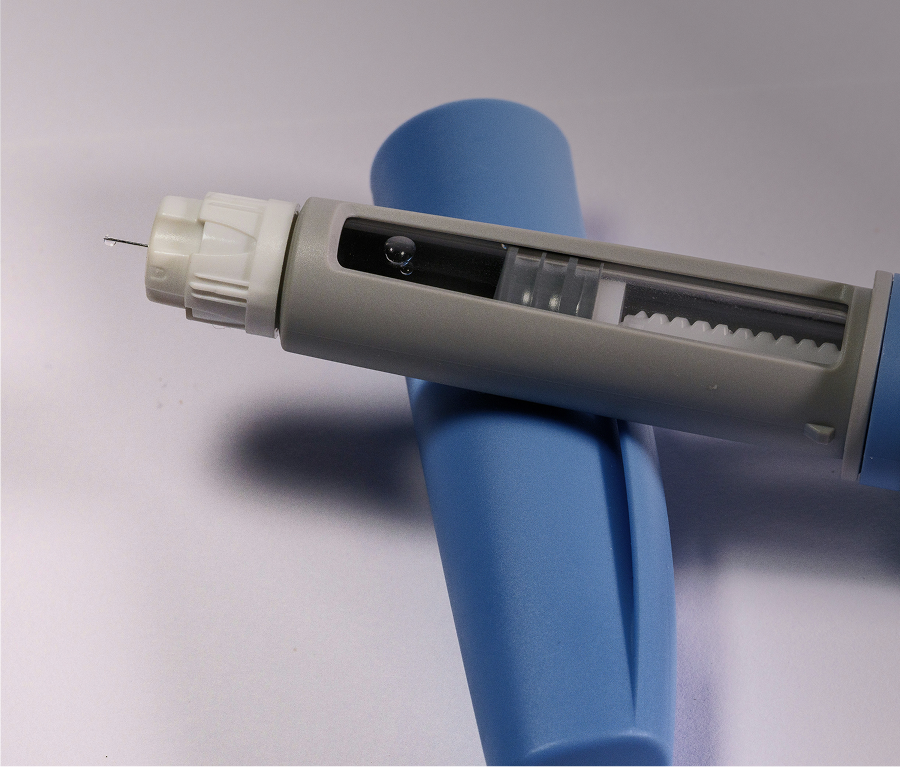
Injectable GHK-Cu is a different conversation. It is not FDA approved for skin rejuvenation, and we do not have good human trials showing better skin outcomes, but this is a space I’d watch closely, as the industry is making big bets on this being a successful intervention.
So I would put GHK-Cu in the promising category. The mechanism is compelling. The human evidence is interesting, but not yet tretinoin level.
Red light belongs here too, partly because it works differently from microneedling and lasers. It does not need to damage the skin first.
Photobiomodulation uses red and near infrared wavelengths to influence mitochondrial signaling and fibroblast activity, which may increase collagen production.
In a frequently cited 2014 trial, 136 people were treated over 15 weeks. Researchers found significant increases in collagen density along with improvements in skin roughness compared with controls.
The caveat is that red light therapy is not one standardized treatment. Wavelength, power, distance, treatment time, and total dose all matter, and consumer devices vary enormously. A recent evidence review found that many claims around at home devices go beyond the clinical evidence.
So red light is not magic. But properly dosed, there is legitimate evidence that it can influence collagen biology without intentionally injuring the skin.
This is where the collagen story gets more aggressive, and where the changes to dermal structure can be much more significant.
Biostimulators
Biostimulatory injectables are treatments designed to prompt the skin to make more of its own collagen over time. Rather than mainly creating immediate volume by placing a water-binding gel under the skin, they introduce materials that trigger a controlled, local-tissue response; this activates collagen-producing cells, including fibroblasts, and gradually remodels the dermal matrix
Here are some common examples:
A 2025 review found consistent improvements in skin quality and new collagen formation with both.
Polynucleotides
Polynucleotides are one of the more interesting frontier technologies in aesthetics.
These are purified DNA fragments, usually derived from salmon, that are injected into the skin with the goal of stimulating fibroblasts and improving the tissue environment.
A review of nine studies found improvements in wrinkles, texture, and elasticity with a generally favorable safety profile. But the studies were small and mostly low to moderate quality.
The biology may be ahead of the clinical evidence here too. Recent mechanistic work suggests polynucleotides may influence adenosine signaling, immune behavior, and collagen I and III production in aging fibroblasts.
Interesting? Very. Proven? Not yet.
Microneedling and RF Microneedling
One of the stranger ideas in skin rejuvenation is that controlled damage can create healthier tissue.
Traditional microneedling creates thousands of tiny injuries in the skin, triggering a wound healing response that activates fibroblasts and stimulates new collagen formation.
RF microneedling takes that a step further by delivering thermal energy into the dermis through the needles, creating a stronger remodeling signal.
The most interesting finding may go beyond collagen alone. In a recent split face trial involving women over 60, RF microneedling reduced senescent fibroblasts while increasing healthier, proliferating fibroblasts, alongside increases in collagen and elastin.
So both approaches can stimulate collagen remodeling, but RF microneedling may also be changing the aging cellular environment responsible for maintaining that collagen.
Exosomes
Exosomes are tiny membrane-bound packages that carry proteins, lipids, RNA, and other biological signals from one cell to another.
That makes them extremely interesting for regenerative medicine. In theory, the right exosomes could influence fibroblast behavior, inflammation, collagen production, wound repair, and perhaps even cellular senescence.
Human data are starting to emerge. A 2026 review looked at 18 studies of topical exosomes for skin rejuvenation and found reported improvements in collagen, elastin, wrinkles, elasticity, hydration, and pigmentation.
But ten of those studies combined exosomes with another procedure, often microneedling.
So when the skin improves, what actually did the work? The exosomes? The procedure? Both? We don’t really know.
The commercial market is even harder to interpret. Products vary in where the exosomes come from, how they are isolated, how they are characterized, and how they are stored.
There is also a regulatory issue. The FDA says there are currently no FDA-approved exosome products and has warned about adverse events associated with unapproved products. That warning is worth keeping in mind.
The science is genuinely exciting.
Three lines of research are worth tracking, and they get progressively less practical and more interesting.
Most collagen in supplements and medical products comes from animals, such as cows, pigs, or fish. Recombinant collagen uses a different approach: scientists program living cells—often yeast or bacteria—to make collagen based on human genetic instructions. This could reduce dependence on animal sources, make products more consistent from batch to batch, and let researchers create collagen designed for particular uses, such as wound repair or cosmetic injections.
The challenge is that human collagen is not just a simple protein strand: it has to be folded and chemically modified in very specific ways to form the strong, flexible structure found in our tissues.
A 2025 randomized trial of injectable recombinant humanized type III collagen for facial rejuvenation reported a response rate of roughly 72 percent on a global aesthetic scale, and a 2026 split-face trial paired the injection with a collagen peptide serum and found additional gains in skin evenness.
These were small, early, and geographically narrow studies. But the direction is compelling: synthetic biology may make it possible to produce more consistent, purpose-built collagen materials without depending on animal-derived sources.
An aging fibroblast does not simply get lazy. Some enter a state called cellular senescence: they remain alive, but stop dividing and can begin releasing a mix of inflammatory signals and tissue-remodeling enzymes known as the senescence-associated secretory phenotype, or SASP.
A dysfunctional fibroblast can degrade the neighborhood around it. That reframes the question. Instead of asking how to make an old cell produce more collagen, we can ask whether to clear it. Senolytics and senomorphics are under active study for exactly this in skin, though none is approved for clinical use. This also loops back to the radiofrequency microneedling result above, which reduced senescent fibroblast counts. Some existing procedures may already be working through this mechanism without anyone framing it that way.
Partial Reprogramming
In 2022, researchers briefly exposed human dermal fibroblasts from middle-aged donors to reprogramming factors and stopped short of full pluripotency. The cells came back roughly 30 years younger by transcriptomic and epigenetic clocks, retained their fibroblast identity, and produced youthful levels of collagen protein. Conceptually it is a different project from everything else in this issue. Rather than compensating for aging cells, it restores younger cellular function.
Your skin's primary job is keeping things out. The dermis is a remarkable barrier, and a molecule can look spectacular in a petri dish and accomplish almost nothing on intact skin.
As the field moves toward peptides, proteins, nucleic acids, and vesicles, delivery becomes as consequential as discovery. A biologically brilliant molecule that never reaches the fibroblast is not a treatment. It is an expensive ingredient sitting on top of your face.
This is why the future of skincare may be as much about delivery technology as it is about discovering new ingredients.
So where does that leave us?
Collagen matters enormously.
For now, we can protect the collagen we have, stimulate the production of new collagen, and remodel damaged tissue. The next generation of interventions is attempting something far more ambitious: making the cells responsible for maintaining our skin young again.
Until then, the right regimen will depend on your skin, your goals, and what you are willing to do consistently.
A good dermatologist can help you put the pieces together, from sunscreen and retinoids to peptides, devices, and in office procedures, and build a protocol that actually makes sense for you.
A great dermatologist will also recognize that skin does not exist in isolation. Nutrition, sleep, metabolic health, hormones, and the rest of your lifestyle all influence the biology underneath it.
Disclaimer: This newsletter is provided for educational and informational purposes only and does not constitute providing medical advice or professional services. The information provided should not be used for diagnosing or treating a health problem or disease, and those seeking personal medical advice should consult with a licensed physician.
August 29, 2026

August 21, 2026

August 15, 2026
August 7, 2026
July 30, 2026


July 23, 2026

July 16, 2026