Optometrist Dr. Agarwal is here to tackle your burning questions about red light therapy, including how often to use it
Last week, we went down the rabbit hole of red light therapy. While it’s a technical subject, full of wavelengths and irradiance levels, it becomes much simpler once you spend a little time with it. I don’t add to my wellness routine lightly, because each new thing takes time and bandwidth.
But what I learned about red light therapy sufficiently convinced me it’s worth carving out time for each week.
If you missed it, you can catch up on the Red Light Therapy Issue
Catch Up
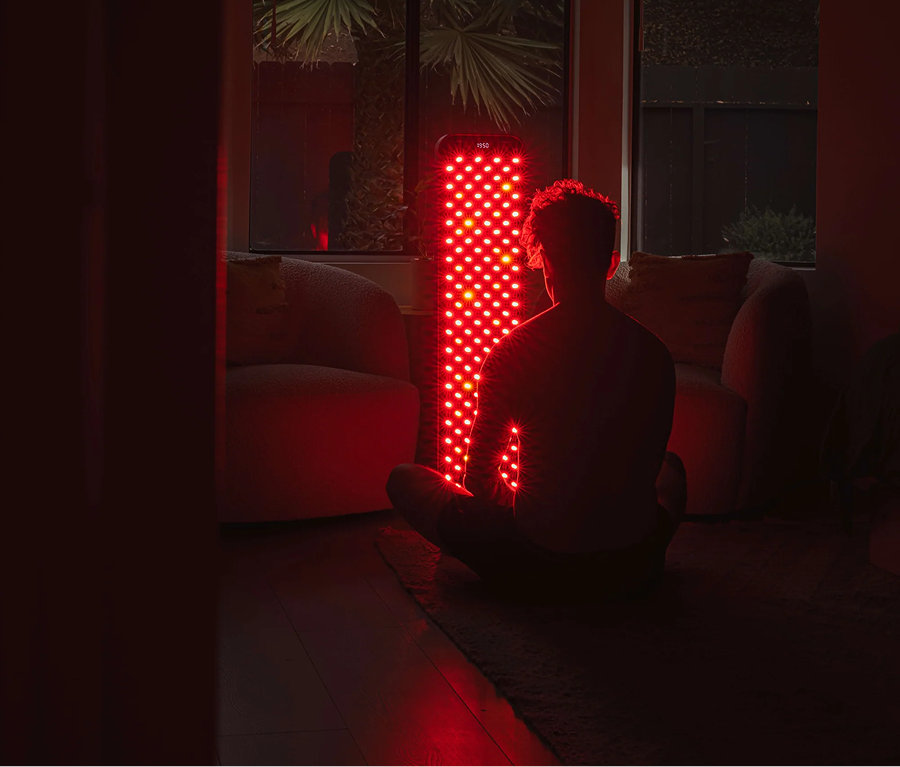
One important piece of the red light puzzle has been solved by the companies building the best products. They take the guesswork out of it by building in presets for different goals, so the device handles timing and intensity based on the outcome you’re after. Our sponsoring partner for this issue, Renew Red Light, has done just that. (Clicking on our sponsor links goes a long way toward helping us make all our digital content free for you—and there’s more coming. So we appreciate you checking them out.)
Despite our in-depth exploration of red light therapy, many of you have your own unique experiences with medical technology and have unanswered personal questions. For those, we bring them to an expert in the field. Today’s expert is Dr. Meenal Agarwal.
Dr. Agarwal is a board certified optometrist, host of the podcast Uncover Your Eyes: The Truth About Health And Wellness, and a leading voice in understanding the eye–brain connection. Her work challenges the idea that vision is just about seeing clearly, reframing it instead as a foundational input for cognition, emotional regulation, and long term health.
She coined the term “Spatial Awareness Processing Disorder” to describe a growing pattern driven by screen-heavy modern life. As more of our time is spent in flat, two-dimensional environments, the brain gradually loses its ability to judge distance, track motion, and move confidently through real world space. For many people, this shows up as crowd overwhelm, anxiety, and a subtle tendency to withdraw from busy environments.
Her upcoming book, Stuck in a Flat World: How Screens Rewire Our Brains, Spatial Awareness, and Sense of Safety, explores how this shift is reshaping not just how we see, but how safe, connected, and grounded we feel in the world.
Let’s get into your questions, and her answers.
Q. How often should red light therapy actually be used to see meaningful results, and does the recommended frequency change depending on whether the goal is day to day recovery, injury healing, or long term healthy aging?
Red light therapy isn’t about doing more. It’s about dose, timing, and intent. Generally, I recommend short sessions of about 5–15 minutes per area about 3–5 times per week for day-to-day recovery and energy. For injury healing, pain, or inflammation, I recommend daily or near daily use for approximately 2–6 weeks, targeted for 10–15 minutes per area. For general long-term healthy aging, you can consider using it fewer times per week, around 2–4 times, but consistently over months.
Disclaimer: These are general guidelines, not medical advice. The ideal dose can vary based on the specific device, its power output and wavelength, how close you are to the light, and individual factors like skin type, health status, and sensitivity. Start conservatively, pay attention to how your body responds, and adjust accordingly
A Message from Our Partner
Not all red light products are created equal.
A serious red light device needs enough power to reach tissue. It needs precise, research-backed wavelengths. And it needs even power distribution so the benefits are consistent and predictable.
Renew Red Light products check every one of those boxes.
Their panels use high density LEDs for stronger, more even output. They focus on carefully selected red and near infrared wavelengths that support faster recovery, healthy skin, and cellular energy. Their preset modes and optional pulsing remove the guesswork. You turn it on and let it do the work.
Renew devices are professional-grade, built with certified international safety standards, with no unnecessary EMF exposure, and a 3-year warranty.
They also happen to look great in your home.
If you are going to invest in red light therapy, this is what quality actually looks like.
Use code EUD20 for 20% off your purchase at RenewRedLight.com
Q. Should I be using red light only on the areas I’m targeting (like my skin or an injury), or does it make sense to rotate around my body over time?
Both approaches make sense, but it depends on your goal. I would use it on targeted areas for skin, joints, injury, pain. For whole-body or systemic goals like energy, recovery, aging, I would rotate areas over the week. But don’t feel pressure that you need to “target everything” every session
Q. When it comes to eye protection, do regular sunglasses work, or do you need something specific in terms of wavelength or protection level?
Regular sunglasses are not sufficient eye protection because they’re designed for UV and visible sunlight, not high intensity LEDs or near infrared light. I recommend using the eye protection provided by the device manufacturer or purpose built eye protection designed for red and near infrared wavelengths.
Q. Do we need to be concerned about UV light in red light masks or panels?
Red light masks and panels should not emit UV radiation. The UV should be listed as 0% in their specifications. Make sure you buy from a reputable brand. Avoid devices that don’t state the wavelength output. If a device causes eye strain, headaches, or irritation, immediately stop use.
Q. I spend a lot of time in the infrared sauna. Is it still necessary to do red light too?
Red light therapy is nonthermal and works directly at the mitochondrial level, without creating systemic stress. Infrared saunas are heat driven, which is great for sweating, cardiovascular load, and heat shock proteins. They do different things.
If someone is using an infrared sauna regularly and tolerates heat well, they are likely getting the benefits from heat stress. Red light can still add value in areas that the infrared sauna does not target well, such as localized tissue repair, skin health, joint pain, and situations where heat would be counterproductive or fatiguing.
The views expressed by our expert are entirely their own. There is no financial, professional, or organizational affiliation between the expert featured in this Q&A and our sponsor.
Disclaimer: This newsletter is provided for educational and informational purposes only and does not constitute providing medical advice or professional services. The information provided should not be used for diagnosing or treating a health problem or disease, and those seeking personal medical advice should consult with a licensed physician.