community
maha
public health
MAHA vs. ANTI-MAHA: My Experience at Eudemonia
December 7, 2025
December 7, 2025
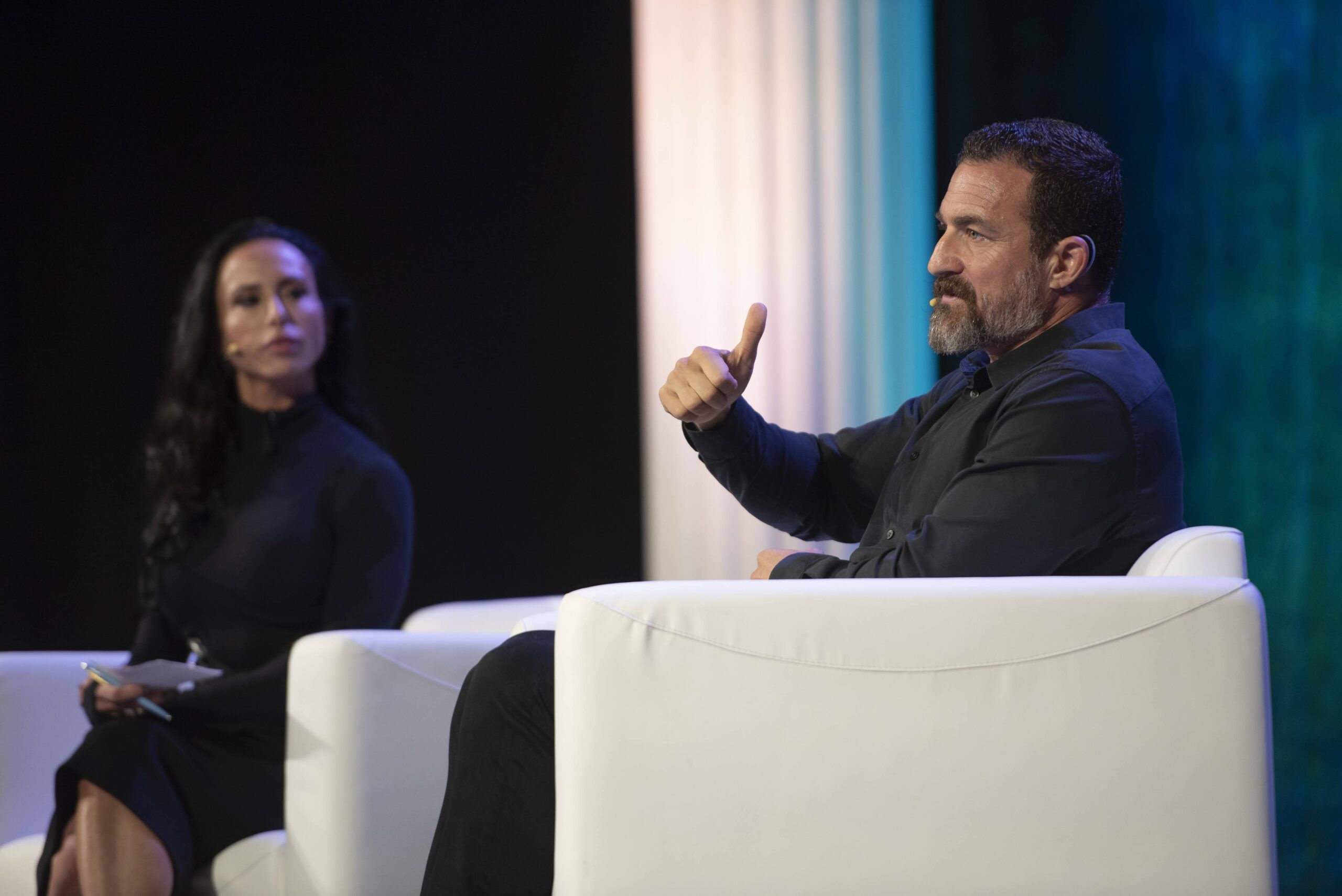
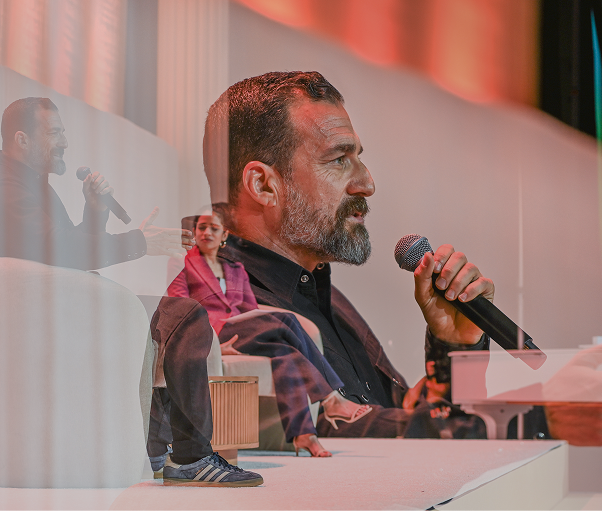
I’ve just returned from the Eudemonia Summit in West Palm Beach, where I had the dubious pleasure of moderating a panel that was unofficially billed as “MAHA vs. Anti-MAHA.”
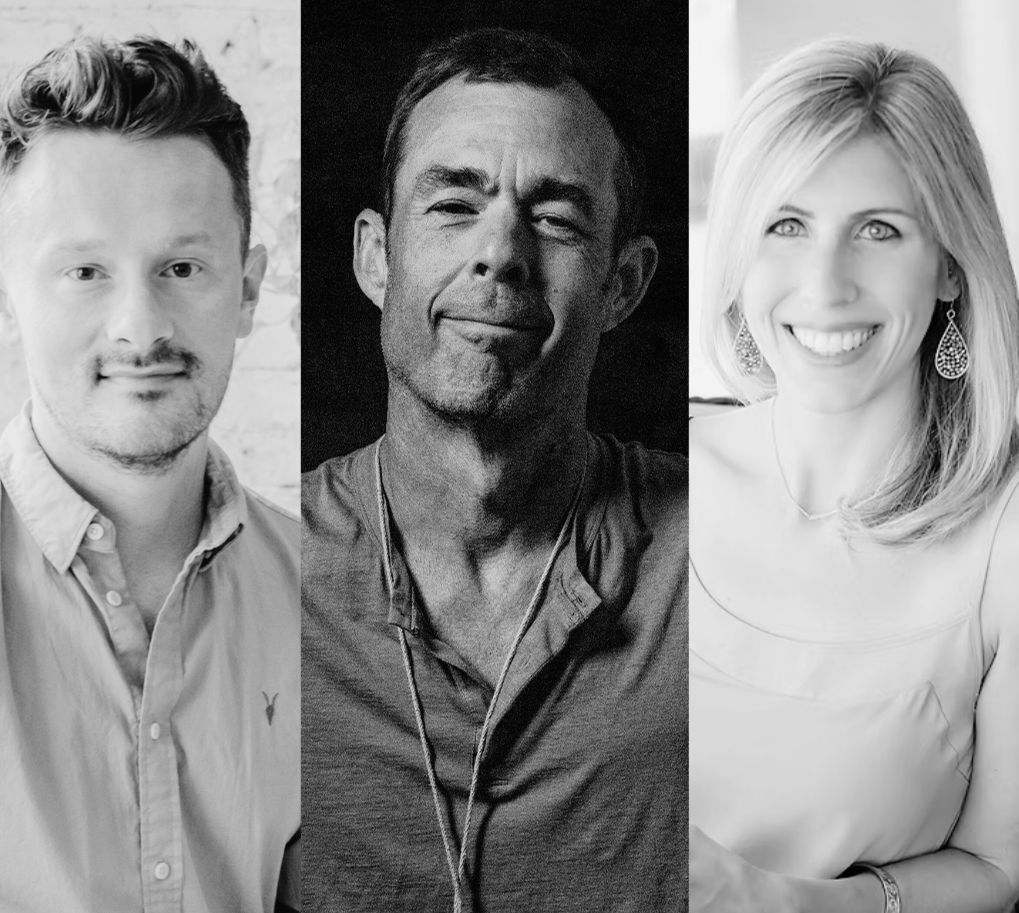
On the stage with me were two brave souls I know and like: Dr. Will Cole and Dr. Jessica Knurick. Both have appeared on the Commune podcast. We’ve produced a course with Will. I count them both as friends.
Jessica has become a very prominent, articulate critic of the MAHA movement, particularly on Instagram and TikTok. She’s well-credentialed, with a PhD in nutrition and has spent many years working in public health. Will hails from Pittsburgh, where he runs a functional medicine telehealth clinic. He’s written a number of bestselling books, and, while he’s very much an independent thinker, he’s become closely associated with the MAHA movement and many of its prominent figures.
So that was the setup: two smart, thoughtful people who profoundly disagree on some very consequential issues in public health, sitting on stage together with me in the middle.
My goals for this session were two-fold.
The first was to model what a sane, constructive, respectful hard conversation looks like.
This is, sadly, anomalous in our current media environment. What passes for “discourse” on social media is mostly people screaming over each other from their respective echo chambers. Content is engineered – and algorithmically rewarded – to tickle our negativity bias: to keep us scared, outraged, anchored in our biases and addicted to a firehose of sensationalism. Outrage works famously for engagement, which provides perverse incentives for content creators, especially in the health space where, ironically, we talk about amygdala hijack and the importance of emotional regulation. We’ve built a virtual machine that rewards hyperbole and punishes nuance.
But it’s really hard to spew vitriol up close.
When you put people together in actual, four-dimensional spacetime – sharing oxygen and making eye contact – tempers are often tempered. There’s more room for curiosity. There’s less appetite for humiliation. And that’s the space I wanted to create: not a food fight, but an honest, “spicy but sane” conversation (about food).
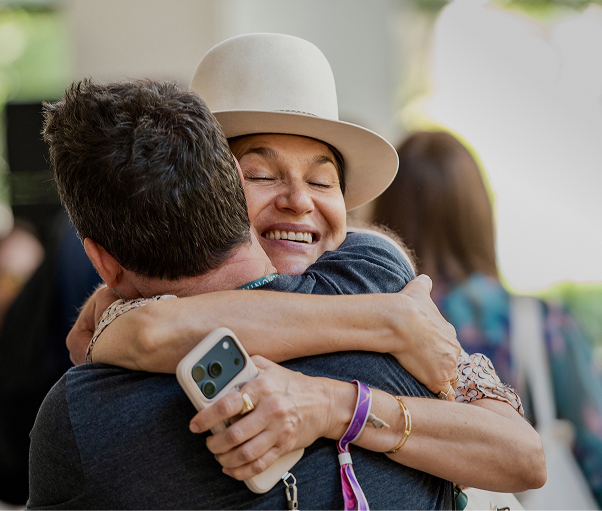
This work is not new to me. I’ve written extensively about it. Last year, I hosted a Palestinian-Israeli summit at Commune Topanga. At Eudemonia 2024, I facilitated a conversation between a Trump supporter and a Kamala Harris supporter. While no ballots were reconsidered, it, somewhat astoundingly, ended with a hug.
As a means of facilitating these conversations, I lean into the tools of nonviolent communication:
So that was goal one: model the kind of conversation I hope people can replicate around their own contentious dinner tables.
The second goal was to untangle the public health debate around the MAHA movement. Because whatever you think about Bobby Kennedy and HHS, it’s undeniable that he has helped drag the conversation about the epidemic of chronic disease into the foreground of American life. And that’s undeniably a good thing.
We do have a chronic disease crisis in this country: heart disease, diabetes, cancer, dementia, autoimmune conditions. The data are pretty clear. On that, there’s broad agreement across the spectrum — from MAHA folks to their fiercest critics.
Where things start to fracture is around the causes of this crisis and therefore what the solutions are.
Many in the MAHA world locate the problem almost exclusively in captured agencies: the CDC, the FDA, the NIH. And to be clear, I think there is regulatory capture. Pharma has oversized influence. Guidelines are often distorted by industry interests. That’s real.
But there’s a much bigger frame: the social determinants of health.
Your health is not just the result of your individual choices or your last lab panel. It’s profoundly shaped by whether you have access to:
If you compare a map of chronic disease “hot spots” in the U.S. with a map of communities that lack these things – food swamps, hospital deserts, neighborhoods saturated with pollution – you see that they are basically the same map. These are often marginalized communities, both rural and urban. They are not sick because they all simultaneously made maladaptive choices in a vacuum. They’re sick because the conditions of their lives make health uncommonly hard and disease extremely easy.
So, one tension in this debate is: Is the problem mostly the CDC, or is it the entire social, economic, and environmental context that shapes health? Of course, it’s both. But how you weight those pieces matters a lot for policy.
The other big knot we tried to pull on is the strange marriage between the MAHA movement and the Trump administration.
Bobby Kennedy actively and vociferously campaigned for Trump. There’s no question that the MAHA movement helped deliver a constituency that was crucial to getting him elected. A brood of suburban moms along with a flock of people disillusioned with pharma and public health found voice in that movement.
But here’s where the dissonance really kicks in, for me and for many others:
Long before the election, there was Project 2025, a playbook developed by the Heritage Foundation. It laid out, in black and white, the agenda for the next Republican administration. And a huge piece of that agenda was to defang government agencies, especially environmental regulators.
We’re talking about:
All of that is spelled out. None of this was a surprise.
And, of course, you cannot separate environmental health from human health. Heavy metals in the air, PFAS and microplastics in the water, endocrine-disrupting chemicals in our food and packaging — these things drive asthma, cancers, infertility, metabolic dysfunction. They disproportionately affect kids, pregnant women and poorer communities.
So, you end up with this bizarre situation where:
That’s what people mean when they talk about a Faustian bargain. Bobby has a long history as an environmental lawyer. But to take the HHS job, he effectively left a lot of those environmental commitments at the door.
Of course, Bobby doesn’t control the EPA, or the Department of Agriculture, or the Department of Energy. Those are in the hands of people whose ideology is fundamentally anti-regulatory.
This points to a core ideological difference in American politics right now that MAHA tends to overlook or not understand.
Now, here’s the tragic irony: Both Trump and Bernie put their finger on a real problem. America is no longer delivering on the promise of its dream for a lot of people. Folks are being left behind financially. They’re sick. They’re burned out. They feel abandoned by institutions.
Where they diverge is in who they blame and what they propose.
Trump says: the problem is the establishment — big government, big media, big science, big pharma, immigrants. His solution appears to be burn it down and concentrate all power in his office. The plan from there is mangy at best.
Bernie says: the problem is corporate power — big pharma, big food, big energy. We need stronger democratic institutions to hold those forces in check.
Bernie’s pitch is harder to sell, as it rings of socialism. Utter the phrase, “health care is a right,” and you get sent to communist prison with Zohran Mamdani as your cellmate.
“Trust government” is not exactly an easy bumper sticker to hawk at the state fair in a moment when many institutions have appeared to fail people. It’s much easier, emotionally, to torch the whole thing and call everything corrupt.
But here’s where this collides with public health in a very concrete way: You cannot meaningfully address chronic disease, environmental toxins and ultra-processed food without regulation. Period.
Coca-Cola is not going to voluntarily give up profit margins out of pure magnanimity.
This came up on stage in a very practical way around SNAP, the Supplemental Nutrition Assistance Program, what we used to call food stamps.
For decades, Republicans have tried to cut SNAP, usually under the banner of “fraud,” even though the program is widely seen as functioning quite well and generating positive economic impact in local communities. SNAP provides food assistance to over 40 million Americans.
Here’s an area where I actually find myself more aligned with Will (and by extension, with some of Bobby’s ideas):
I do not think we should cut SNAP. (Congress just slashed $200B from SNAP in the “Big Beautiful Bill.”) In fact, I believe we should expand it and improve it. But I do think we should limit what SNAP can be redeemed for.
Right now, you can’t use SNAP for alcohol or tobacco. That makes sense. Those products are unequivocally harmful. But you can use SNAP to buy Coke and ultra-processed foods that are absolutely driving obesity and diabetes.
This is not about moralizing poor people’s choices. It’s about not giving yet another subsidy to companies that are already massively subsidized.
Here’s how that works:
That’s what it means to externalize costs. The profits are privatized; the consequences are socialized.
So, I don’t think the solution is to slash food assistance. Instead, we should restructure it – to scale programs like “Double Up Bucks” – which allows people to double their food dollars when they buy fruits and vegetables. And we should stop allowing SNAP to be redeemed for products that directly fuel the chronic disease epidemic.
This circles us back to the broader point: you don’t change that system without regulation. You don’t get endocrine disruptors out of water, or microplastics out of food chains, or junk out of school cafeterias, purely through good vibes and consumer choice.
You need public policy. You need functioning agencies. You need some version of government that is actually oriented towards public health rather than corporate gain.
Now, to be fair, I don’t want to paint MAHA or HHS as cartoon villains. There have been wins:
But those wins can act as a kind of smoke screen if they convince people that we’re “fixing health” while, in the background, the larger machinery of deregulation and environmental degradation accelerates.
That’s the crux of the discomfort for me: This sense that we’re celebrating the removal of Red Dye 40 from Skittles while quietly dismantling the very systems we need to tackle the bigger, structural drivers of disease.
So that’s some of what we tried to surface on stage. It was spicy, but it was also deeply respectful. There were real points of disagreement, but also little plots of agreement, such as on the reality of chronic disease, on the harms of ultra-processed foods and on the need to change the food system.
And it ended, literally, with a hug – with a recognition of shared humanity of the fact that we probably have more in common than the algorithm would like us to believe.
Walking away from Eudemonia, I felt a strange mix of dissonance and hope.
Dissonance, because we are in a genuinely precarious moment: Democracy is under strain. Public health is politicized. People are confused and scared and sick.
And hope, because when you actually sit people down— in person, in good faith—you realize that nuance is still possible. That disagreement doesn’t have to mean dehumanization. That we can hold two truths at once: that agencies need reform and that we need them; that corporations create value and require guardrails; that personal responsibility matters and so does the environment we’re dropped into.
We’re not going to meme our way out of the chronic disease crisis. We’re not going to solve it in 15-second clips. We need longer, messier, more human conversations.
So, I’m grateful to Eudemonia (and my dear old friends Sean Hoess and Karina McKenzie) for giving us the stage, grateful to Will and Jessica for showing up fully, and grateful to you for reading. My hope is that by unpacking some of this here, you feel a little more equipped to navigate your own conversations, maybe with a little less reactivity and a little more curiosity.
Because if there’s one thing I took home from Eudemonia, it’s this: We are profoundly interdependent. Our health, our politics, our ecosystems, our microbiomes . . . it’s all connected.
And if we’re going to build a healthier world, we’re going to have to do it together.
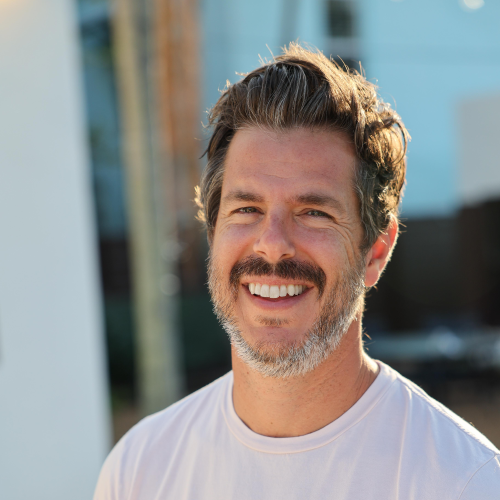
Article written by:Jeff KrasnoCo-founder & CEOCommune

March 27, 2026

March 21, 2026
March 13, 2026

March 6, 2026
February 28, 2026
February 21, 2026

February 14, 2026

February 7, 2026
January 23, 2026